
The Office Gratitude Wall: Evidence-Based Setup for Hybrid Teams (That Won’t Replace Fair Pay)
A calm, research-backed guide to designing a peer-led appreciation wall that strengthens psychological safety without becoming a substitute for fair compensation.

Why a Gratitude Wall (and Why Now)
Is your team feeling disconnected? In a hybrid world, it's easy for the small, helpful moments that build a great culture to become invisible. We promise a simple, powerful tool to change that: a peer-to-peer gratitude wall. This guide will show you how to build one that genuinely boosts team morale and psychological safety, without feeling forced or falling flat after a month.
At my previous engineering company, we built robots for pipeline inspection, which required tight collaboration across electronics, mechanical, data, workshop, field, and customer teams. During a rough project, tensions rose—each group felt the others weren’t supporting them, even though everyone was working flat-out. I reviewed the research on appreciation and partnered with HR to pilot a peer-to-peer gratitude wall; week one felt awkward because people weren’t used to spotting micro-help. By week four, the tone had shifted—more cross-team shout-outs, faster offers to help, and calmer stand-ups.

What is an office gratitude wall, and how is it different from a recognition program?
Short answer: An office gratitude wall is a low-friction, peer-to-peer channel for publicly thanking colleagues for helpful behaviors and positive attitudes. It focuses on appreciation (who they are), which is relational and intrinsic, not formal recognition (what they achieved), which is performance-based and extrinsic.
Why does this distinction matter for authenticity?
It’s about separating intrinsic social rewards (connection, belonging) from extrinsic financial rewards (bonuses, raises). When you mix them, genuine gratitude can feel like just another management tool designed to measure performance. To keep it authentic, you have to maintain a "separation of church and state" between appreciation and compensation.
What kinds of posts belong on the wall?
- Do: Acknowledge micro-help, "invisible work," collaborative problem-solving, and learning from mistakes. (e.g., "Thanks to Maria for catching that typo before it went to the client!")
- Don't: Include performance ratings, managerial scorekeeping, or anything tied to formal KPIs. This is not the place for "Employee of the Month."
Does a gratitude wall actually improve psychological safety?
Short answer: Yes, a peer-led gratitude wall strengthens psychological safety by making positive, helpful behaviors more visible and normalizing appreciation. This creates an environment where employees feel safer to speak up, collaborate, and take calculated risks—key drivers of team performance and innovation.
What is the evidence?
The benefits are grounded in well-established psychological principles. Here’s how it works:
- Gratitude directly feeds the "Positive Emotions" pillar of the PERMA model of well-being, creating a more resilient and optimistic team environment.
- This positive environment encourages "Organizational Citizenship Behaviors" (OCB)—helpful, discretionary actions that aren't part of an employee's formal job description but are vital for a healthy culture.
What metrics can we expect to see improve?
While this is a culture-building tool, not a performance-driver, you can still track its impact. Look for:
- Initial participation rates and cross-team mentions.
- Qualitative sentiment in the posts themselves.
- Over time, you may see positive movement in retention rates and survey items related to psychological safety and eNPS (Employee Net Promoter Score).

Should the gratitude wall be physical, digital, or both?
Short answer: A "Phygital" (Physical + Digital) model is the only truly effective solution for hybrid teams. Use a digital-first system for collecting posts to ensure equity for remote staff, and a physical display in the office to maximize visibility.
Why is a blended approach superior?
- A purely physical board (like a whiteboard with sticky notes) excludes remote and hybrid employees, creating an unfair divide.
- A purely digital board (like a Slack channel) easily gets lost in the constant stream of notifications and digital noise.
How does the "Phygital" pattern work?
Input: Use a single, easy-to-access digital channel for all submissions. This could be a dedicated Slack channel, a simple Trello board, or a Microsoft Teams channel.
Output: In a high-traffic office area like a kitchen or lounge, display the digital submissions on a large screen in a continuous, visually appealing loop. This makes the gratitude ambient and visible to everyone.
How do we keep the program from dying out after the first month?
Short answer: You sustain engagement by scaffolding participation with structure and shared ownership. The biggest killer of a gratitude wall is the "blank page" problem, so you must use specific prompts, themes, and a rotating curator to make participation easy.
Use a rotating "curator" model.
Assign a different team member (not from HR) each month to be the "Gratitude Champion." This person's role is simple:
- Post one engaging prompt per week.
- Highlight a few great posts in a team meeting to celebrate them.
Provide a library of creative prompts.
Go beyond "thanks for your help." Give your team specific things to look for. Try prompts like:
- "Share a time you learned something from a colleague's mistake."
- "Who asked a great question this week that helped the team think differently?"
- "Reframe an apology: instead of 'sorry I'm late,' try 'thank you for your patience.' Who showed you patience this week?"
Get 50+ creative prompts to spark authentic appreciation.
To make it easy, we prepared a free PDF with over 50 specific, creative prompts that work for any kind of team—from engineering to marketing. Get instant access and never run out of ideas.

How to Set Up Your Gratitude Wall
- Define Goals & Guardrails: Before you start, publicly state that the program's goal is fostering peer appreciation, not tracking performance. Confirm your company's compensation is fair and establish a separate, anonymous channel for constructive criticism.
- Choose Your Phygital Architecture: Select a single digital tool for intake (like a #gratitude Slack channel) and an office display screen for output.
- Write a Simple Posting Standard: Create a short, one-page guide: focus on specific behaviors, celebrate "invisible work," and explicitly state that performance ratings are not welcome.

- Launch in a Live Meeting: Kick off the program in an all-hands meeting with a live "gratitude icebreaker." Have leaders go first to model specific, non-generic posts.
- Assign a Rotating Curator: Immediately assign the first month's "Gratitude Champion" to ensure continuity from day one.
- Instrument and Share Wins: Track basic metrics like participation. Share a brief, positive recap once a month to maintain momentum.
- Sustain and Evolve: The curator should refresh prompts weekly. Hold a quarterly retro on the program itself to gather feedback and make adjustments.
Key Facts (Verifiable)
- Gratitude in the workplace is correlated with higher positive emotions, life satisfaction, and social support. Source
- Psychological safety is a key predictor of team learning behavior and performance. Source: Amy Edmondson, Administrative Science Quarterly
- Authentic pride mediates the relationship between employee recognition and helpful "Organizational Citizenship Behaviors" (OCB). Source
- Over-reliance on extrinsic rewards (like money) can "crowd out" intrinsic motivation (the genuine desire to do something). Source: selfdeterminationtheory.org
Frequently Asked Questions
Isn’t this just "employee recognition"?
No. This is peer appreciation, which is intrinsic and relational. It should be kept completely separate from top-down, KPI-driven recognition programs that are tied to performance and compensation.
Should we give points or gift cards for posts?
Not on the wall. Tying extrinsic rewards to this can corrupt the intrinsic motivation that makes it work. Keep financial rewards in your distinct, formal recognition program.
How do we prevent "toxic positivity"?
By actively promoting a parallel, safe channel for concerns and anonymous feedback. Also, use prompts that normalize gratitude for lessons learned from mistakes, not just wins.
Who owns it? HR?
Content stewardship should rotate among employees via the "curator" role. Leaders should participate to show support but not dominate the conversation. Their primary role is to be a "guardian" of the space.
Physical or digital?
Both. Use a digital-first intake for inclusion and a physical display for attention—the "phygital" pattern is the most equitable and effective for hybrid teams.
Risks, Limits, and When to Seek Help
- The "Pay Replacement" Trap: The program is perceived as a low-cost substitute for fair wages, creating deep cynicism. Mitigation: Conduct and communicate a pay-equity audit before you launch.
- Toxic Positivity: The wall becomes the only acceptable form of feedback. Mitigation: Create and relentlessly promote a "dual channel" for anonymous, constructive feedback.
- Performativity & Favoritism: The wall becomes a tool for managers to perform appreciation or for cliques to form. Mitigation: Use a rotating employee curator and emphasize peer-to-peer posts.
- When to Seek Help: If participation is low despite a well-run program, or if feedback indicates deep-seated trust issues, engage an organizational development professional.
Try This Today
If you're not ready to launch a full program, try a 90-second version in your next team meeting. Ask everyone to think of one small, specific action a colleague took that made their week easier, and share it. Notice how it shifts the energy in the room.
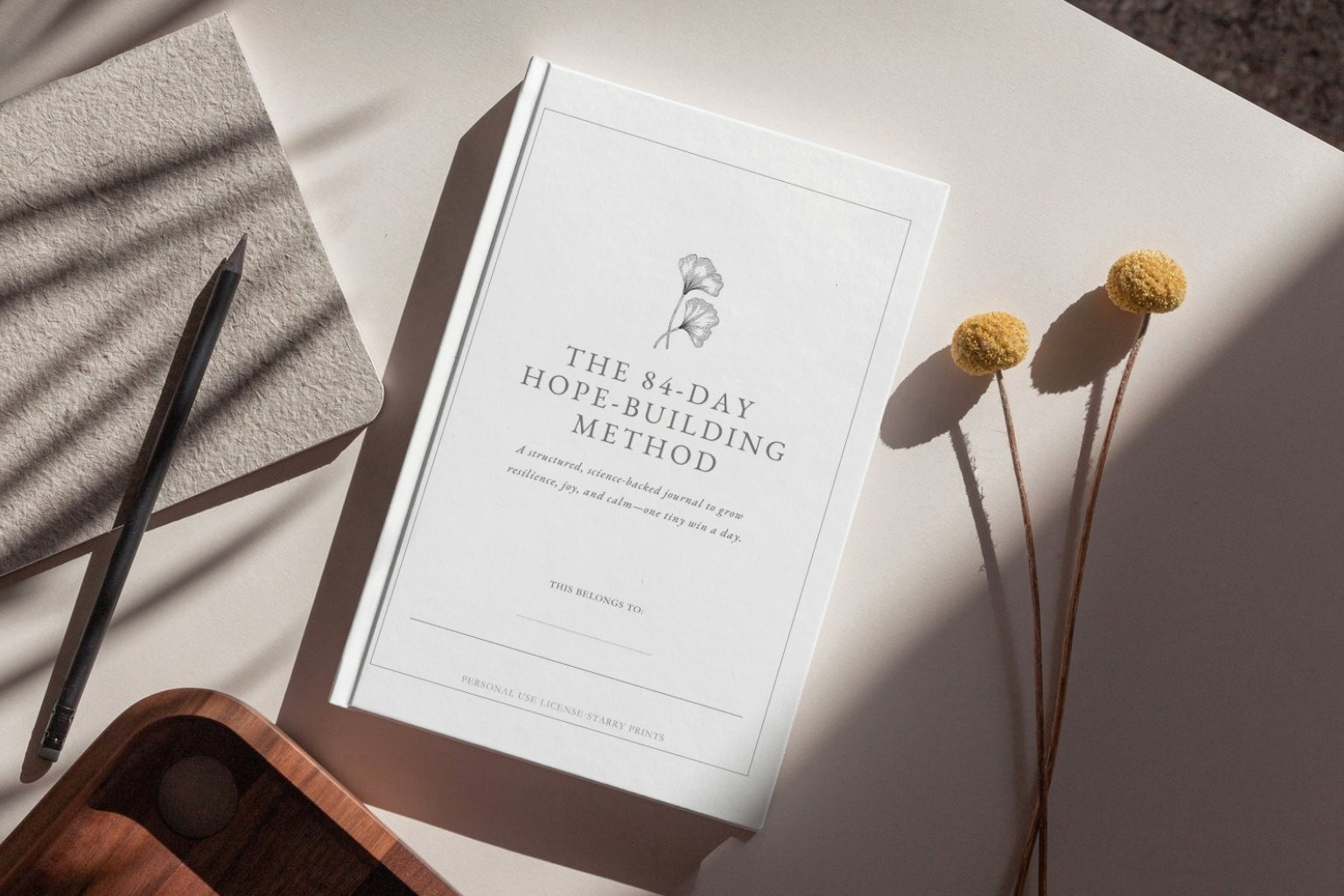
For a more personal practice, consider a guided journal to build your own appreciation habit. Our Starry Gratitude 84-Day Gratitude Prompt Journal offers simple, daily prompts to help you notice the good around you.